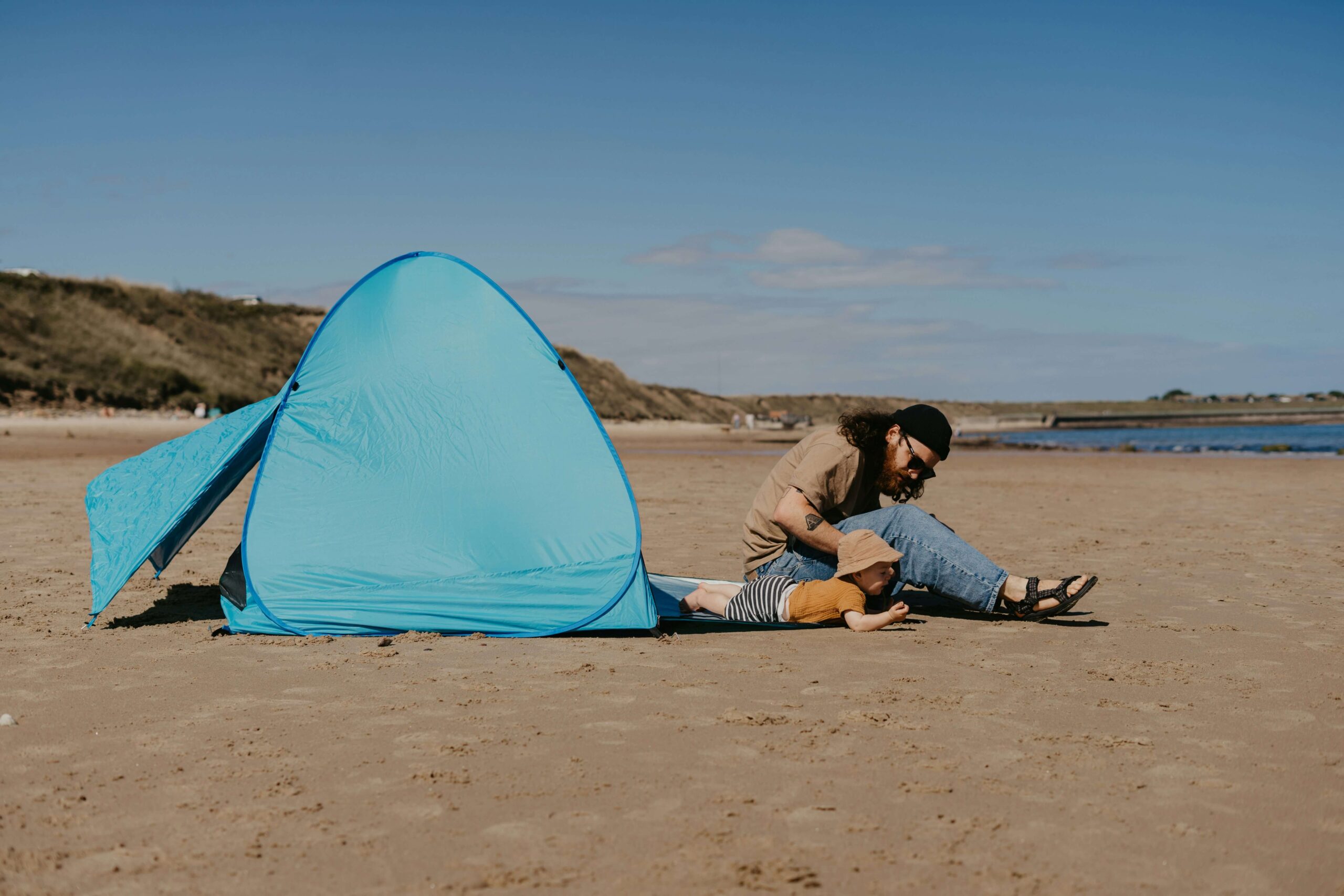
Beach camping offers stunning views, fresh sea air, and the chance to wake up just steps from the shoreline. However, coastal conditions can be unpredictable, with strong winds presenting one of the biggest challenges for campers. Without the right setup, gusts can damage your tent, make sleeping uncomfortable, or even cause your shelter to collapse. Knowing how to protect your tent from wind on a beach will help you stay safe, comfortable, and enjoy your camping trip, whatever the weather.
Why Does Beach Tent Safety Matter in Windy Conditions?
In windy situations, beach tent safety is important because unsecured lightweight constructions behave like sails and become dangerous flying projectiles that might land in the water or injure beachgoers.
What Are the Essential Anchoring Equipment to Secure Tents?
Choosing the right anchoring equipment is the first step towards beach tent safety when camping on sandy beaches. Specialised tools are necessary for coastal situations since traditional tent stakes frequently fail in loose sand. Here’s what you need:
- Weighted sand stakes: In coastal locations, where sand provides little resistance, standard tent stakes are difficult to use. Wider flanges and heavier construction allow weighted sand stakes to efficiently grasp loose sand.
- Specialised anchoring kits: Screw-type sand anchors and reinforced guylines are common components of complete anchoring systems made for coastal environments. The best pegs for beach tents in windy conditions combine clever engineering with corrosion-resistant materials.
- Makeshift ballast solutions: In the absence of specialised equipment, campers can utilise gear or sandbags as makeshift ballasts. Effective weights that fit the tent corners are created by filling mesh bags with damp sand.
How Do You Choose the Best Spot to Pitch Your Beach Tent?
Choosing the right place to pitch your beach tent is one of the most effective ways to protect it from strong coastal winds. A well-chosen location can improve stability, reduce wind exposure, and make your camping experience more comfortable. Before setting up, take a few minutes to assess the surrounding area and avoid locations where your tent will be fully exposed to strong gusts.
When selecting a spot, look for natural windbreaks such as sand dunes, grassy banks, or low vegetation that can help block the wind without creating safety hazards. Avoid pitching directly on the highest or most exposed parts of the beach, where winds tend to be strongest. At the same time, be careful not to camp too close to the water, as rising tides and waves can quickly reach your tent.
How Do You Protect Your Tent From Wind on a Beach?
Choose the Right Tent for Extreme Conditions
If the area frequently experiences heavy winds, your tent should reflect that fact. Look for stronger anchor points, more durable fabric, and sturdy frames. Certain tents are designed to withstand strong winds. Although they might not be the largest or lightest, they are typically more dependable in difficult situations.
Reinforce the Tent with Extra Weights
Add weight when you’re unsure. The tent can be kept grounded with additional sandbags or weights. When the wind comes in short, powerful bursts, this is extremely helpful. The tent is more difficult to hoist or move suddenly due to the additional mass.
Maintain Tent Structural Integrity
Examine your tent briefly before you leave the house. In high wind, little tears, loose seams, or bent frame elements might become major issues. As soon as possible, fix what you can. When conditions aren’t perfect, regular maintenance helps your tent function better.
What are the Key Features to Look for When Choosing a Wind-Resistant Beach Tent?
The key to beach tent safety in windy situations is choosing the appropriate tent. Wind-resistant tents, in contrast to normal types, use specific engineering to withstand coastal conditions. The following characteristics are necessary for a tent to be genuinely storm-worthy:
Structural Reinforcements
Seek out tents with double-stitched seams and strengthened aluminium poles that are at least 9 mm thick. Coated polyester offers wind and UV protection, while high-density textiles are resistant to tearing.
Aerodynamic Design Elements
Low-profile, sloping designs that deflect wind rather than catch it are highlighted in the best beach tent tips. In wind tests, tunnel-shaped tents perform better than dome-shaped tents. To reduce lift forces, look for models with ventilated canopies that let wind through.
Top-Performing Models
Consider field-tested designs with weighted skirts and sand pockets in the floor when learning how to pick a beach tent for windy conditions. Leaders in the industry test their products in wind tunnels to verify their performance; look for versions that can withstand gusts of more than 25 mph.