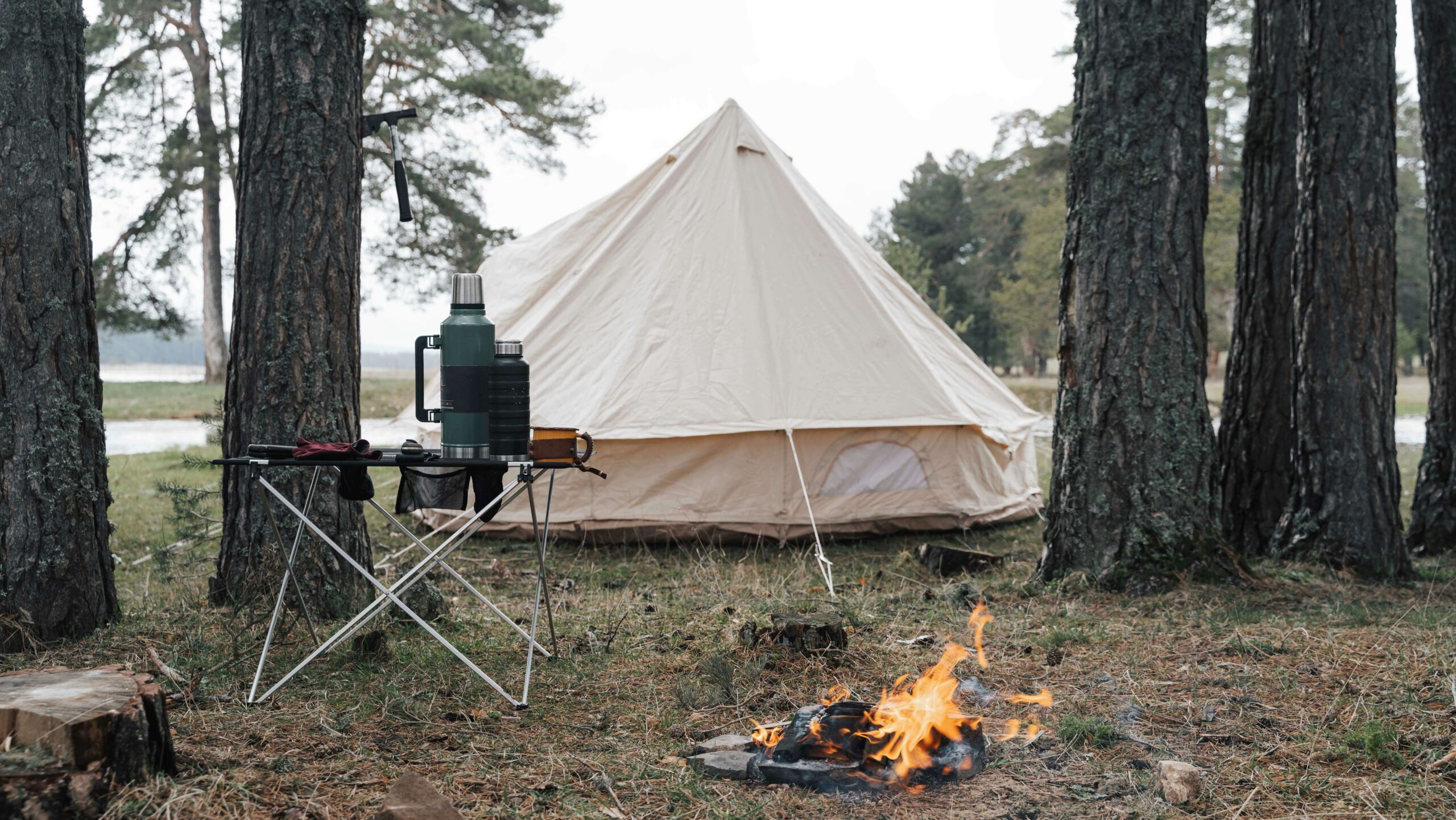
Suffolk is one of the hidden gems of England. With its rich history, picturesque farms, wooded land, estuaries and fishing villages, suffolk is one of the best counties for a holiday. Outdoor holidays in Suffolk are popular and for good reason with beautiful areas like the River Deben, Southwold and Aldeburgh shingle beaches, the Suffolk Broads and Dedham Vale. With so much to see and do those looking to plan a Suffolk holiday will be faced with a popular choice. Camping? Or glamping?
From the outside, camping and glamping may seem very similar. They both keep you connected to the great outdoors and provide a beautiful scenic break from the daily grind. However, both types of camping are very different and cater to different types of people.
What Is Camping?
Traditional camping is packing a tent and your own personal shelter and staying at a designated campsite. Camping is all about pitching a tent, rolling sleeping bags and cooking on a camp stove. Then, falling asleep to nature sounds.
Typical Camping in Suffolk Looks Like:
- Bringing your own tent, sleeping bags and cooking equipment (or renting a basic pitch and hiring gear)
- Staying at campsites with shared facilities such as toilet blocks, showers and washing-up areas
- A hands-on, self-sufficient style of holiday where you’re responsible for your own comfort
- Often lower costs, especially for those who already own camping equipment
- A closer, more immediate connection to the natural environment. You feel the temperature changes, hear the rain on canvas and are more exposed to the elements
Suffolk has a long tradition of camping, with sites scattered along the coast near Dunwich, Walberswick and Orford, as well as inland near the Stour Valley and Brandon area of Thetford Forest.
What is Glamping?
As the name suggests, ‘glamping’ is a combination of ‘glamorous’ and ‘camping’. This provides the opportunity to experience some aspects of nature, while trading the strenuous camping work and discomfort for the luxury of pre-camping set up accommodations.
Suffolk Glamping Options Include:
- Bell and safari tents that have actual beds and adorable stoves
- Shepherds huts with small kitchens that have under floor heating
- Yurts, which have elaborate decorations and round, unusual shapes
- Converted transport (think horse boxes, train cars and fishing boats)
- Treehouses
- Pods that are wooden, insulated and eco-friendly and have heating, electricity and even bathrooms
Glamping offers its guests the consistent experience of rustic charm combined with modern comfort. Many active sites around the Suffolk Coast and Heaths National Landscape, Southwold, Framlingham and the Waveney Valley, include hot tubs and fire pits.
Key Differences at a Glance
| Feature | Camping | Glamping |
|---|---|---|
| Accommodation | Your own tent, caravan, or campervan | Pre-erected bell tents, yurts, shepherd’s huts, pods, cabins |
| Setup required | Yes. You pitch your own tent | No — accommodation is ready on arrival |
| Comfort level | Basic; sleeping bags/mats on the ground | High; real beds, linen, sometimes heating and electricity |
| Bathroom facilities | Usually shared/communal blocks | Often en-suite or private facilities |
| Kitchen facilities | Portable stove or communal cooking area | Often a kitchenette, fridge, sometimes a hob |
| Heating | None, unless self-provided | Wood-burners, underfloor heating, or electric heaters common |
| Average cost per night | £10–£30 | £80–£250+ |
| Equipment needed | Tent, sleeping bag, cooking gear | Just your personal belongings |
| Weather resilience | Vulnerable to wind, rain, cold | Well insulated and weatherproof |
| Typical Suffolk locations | Dunwich, Walberswick, Thetford Forest, Orford | Southwold, Framlingham, Waveney Valley, Suffolk coast |
| Best for | Budget travellers, hikers, festival-goers, families used to camping | Couples, families wanting comfort, first-timers, special occasions |
| Environmental footprint | Generally low, though depends on transport and gear | Varies. Many sites use eco-friendly building materials and renewable energy |
| Sense of adventure | High. Hands-on and unpredictable | Moderate. Comfort-focused but still outdoors |
Cost Considerations
Budget is often the deciding factor. Traditional camping remains one of the cheapest ways to holiday in the UK. A pitch at a Suffolk campsite might cost as little as £10–£20 per night for two people, especially at simpler, family-run sites without extensive facilities. If you already own a tent and camping gear, your main costs are the pitch fee, food and travel.
Glamping, by contrast, is priced closer to a boutique hotel stay. Depending on the type of accommodation and season, prices in Suffolk can range from around £80 a night for a simple bell tent to £200–£300 or more for a cabin.